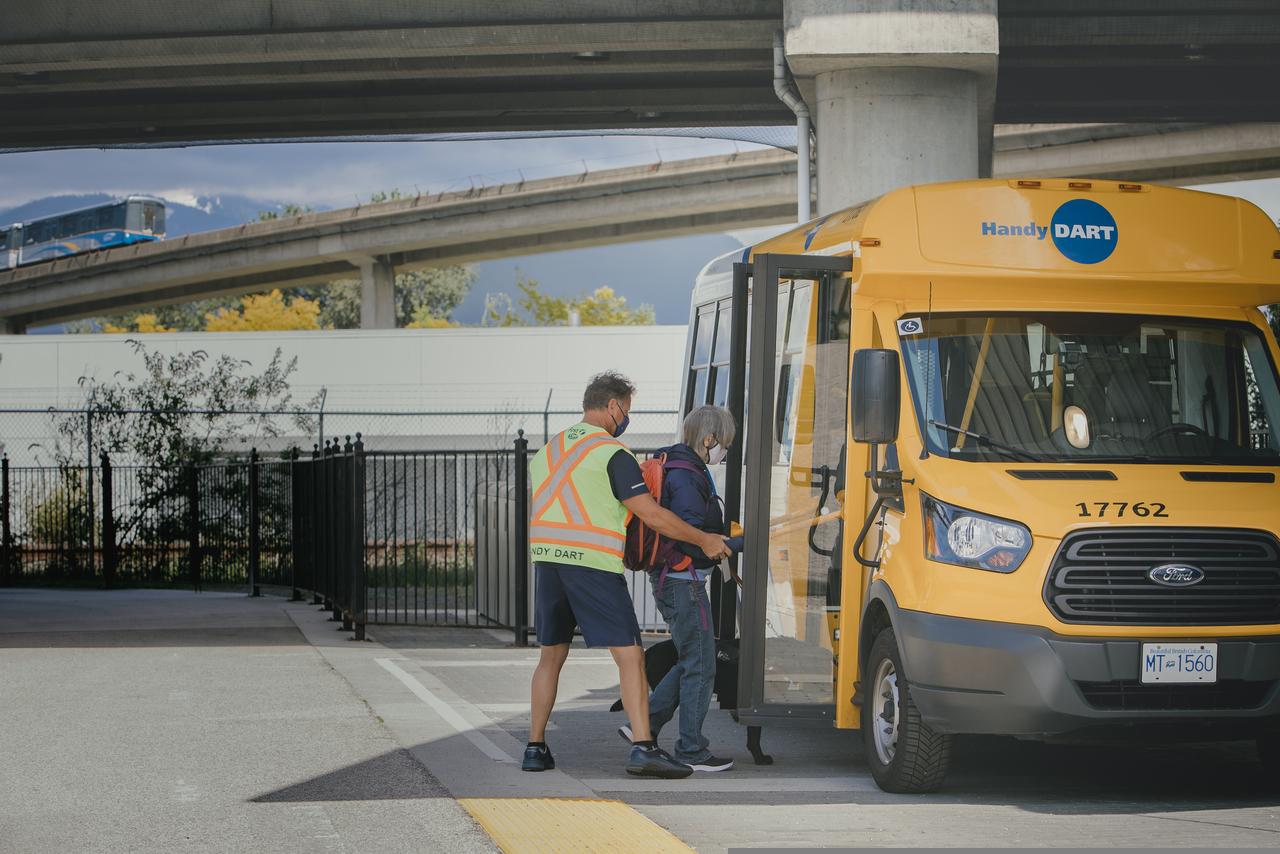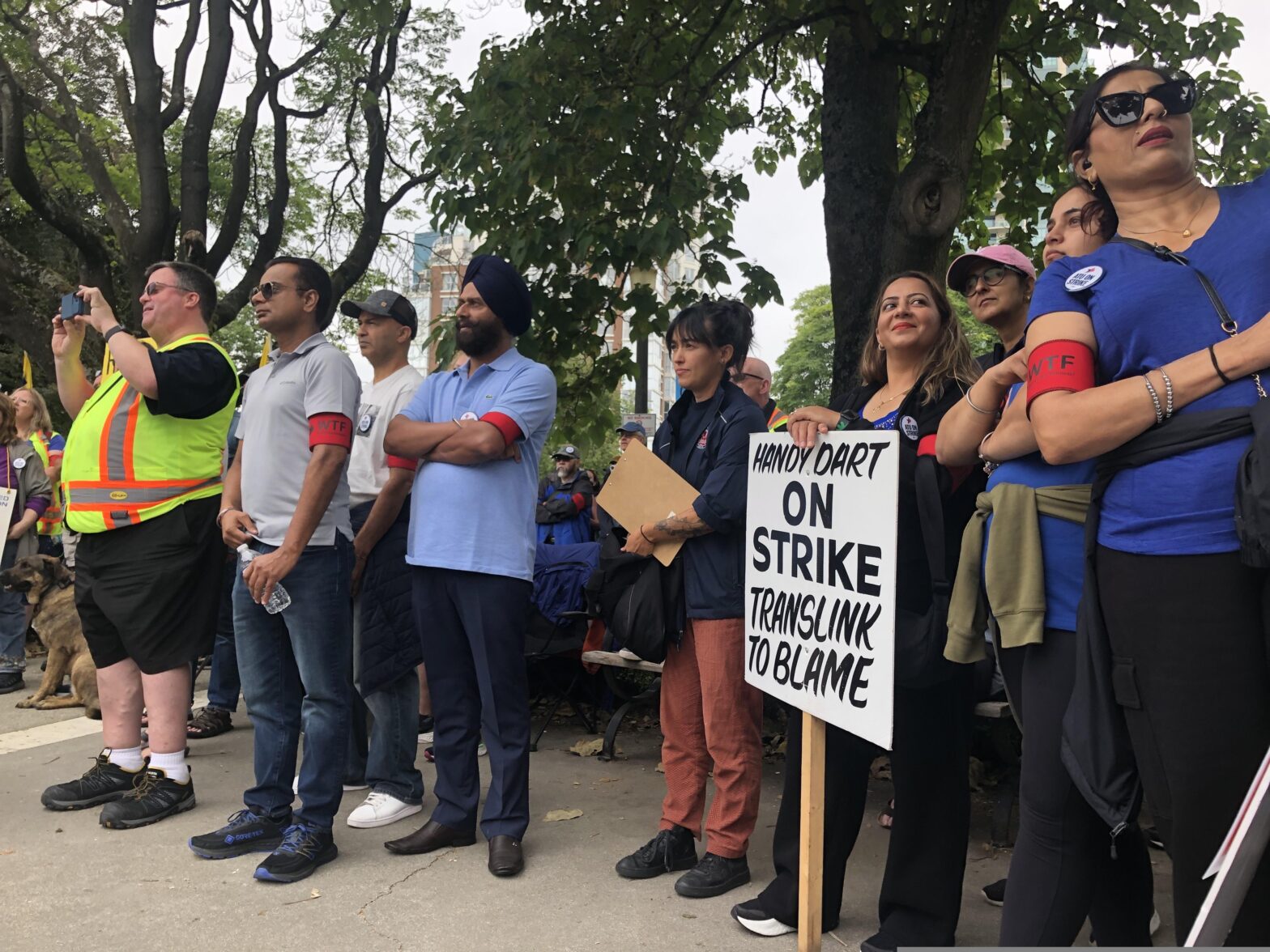
With the HandyDart strike now one week old, some positive trends have emerged, and it is also clear that some negative tendencies are still hanging around on the picket line. The negative is that there are some residual signs of worker’s complacency; the positive, that new critiques and new practices of militancy are rising. With some careful attention, this new militancy could take on lasting forms of rank and file self-organization, which would help us win this strike, and which could reshape the conditions of work and life for HandyDart workers once we’re back to work – between this strike and the next.
Kickoff rally
The strike began Tuesday September 3rd with a demonstration called by the HandyDart workers’ union, the Amalgamated Transit Union (ATU). Four hundred people rallied in the park outside the gates from the Vancouver HandyDart depot, at Main Street and Terminal Ave. Most of those present were ATU members, designating themselves with their driver’s reflective vests or “on strike” picketer’s signs. But there was also a respectable turnout from supporters – including leaders of important local unions and labour organizations, and also a few HandyDart riders.
The theme of speeches from the stage focused on the contradictions born of the public-private-partnership between the Provincially operated Translink transit company, which is a taxpayer funded public company, and TransDev, the France-based transnational transit corporation that has held the contract to operate HandyDart since swallowing up First Transit at the beginning of 2023.
The new ATU president Joe McCann opened the rally by outlining ATU’s demands and frustrations: that paratransit workers are paid a fraction of a conventional transit workers’ wage; that Translink has been unwilling to consider the union’s longstanding demand to stop contracting HandyDart out to a private company and “bring us in-house;” and that more and more HandyDart trips are being contracted out a second time to taxis – approximately doubling the frequency of taxi-diverted trips since 2019.
Most of the other speakers were leaders of other unions, including the ATU International president John Costa, and local presidents of ILWU, BCGEU, CUPE, and a representative of the Vancouver and District Labour Council. Their messages were more general, but not less applicable. They decried the government for sending tax dollars overseas and celebrated the power of the union. At worst, they used the labour bureaucrat’s old trick of swearing a lot as a stand-in for action. They did chant “fuck around and find out!” and “fuck Transdev!” They did not pledge to carry out sympathy strike actions, to honour ATU picket lines at related jobsites, or to donate resources to ATU’s strike fund. At best, they amped up workers and showed that ATU members strike is being noticed by the broader labour movement.
Alliance with riders
The old alliance between HandyDart workers and riders was also on display at the rally. Beth McKellar, chair of the HandyDART Riders’ Alliance, told the story of her advocacy for HandyDart with local mayors and other local power brokers alongside ATU leaders and other transit advocates, closing her speech by echoing the demand to Translink to “bring HandyDart in-house now!”
In the 2009 strike, the alliance between HandyDart workers and riders was critical – with riders organizing actions at the TransLink board meeting and stepping out in defence of the system that they depend on and care for. Beth’s leadership at the rally was a sign that this alliance is still alive, even if the level of organization and militancy of the disability and elder community has been muted by the privatization of the transit system they once founded and controlled.
Lessons from the Fraser Valley strike
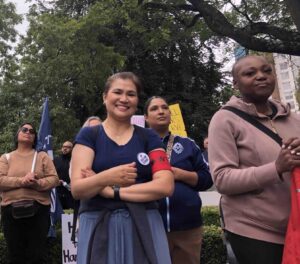
The message that HandyDart strikers needed to hear most came from CUPE BC president Karen Ranalletta, who partially recounted some of the lessons of the 2023 Fraser Valley transit strike. She said, “CUPE 561 members spent 124 days on the picket line and they won. They are very very close to parity with Translink drivers in the Lower Mainland. We have members in their 60s, 70s, and even their 80s because they had no pension. It’s shameful. But they knew that it was important for the next generation to have access to a pension, and with 124 days on the picket line they won a pension. And the coolest thing of all: 220 members in the Fraser Valley brought a global corporation to their fucking knees.”
What Ranalletta’s story was missing was the critical role that transit workers themselves played in this strike – dragging the CUPE leadership into this four month long strike and refusing to listen to cautions that their demands were unreasonable or unwinnable. Transit workers in the Valley had never been on strike before, but, when I spoke with an old timer on the picket line told me that he thinks the reason transit operators in the Fraser Valley suffer worse wages and working conditions than in Metro Vancouver is because the union has never fought hard enough at bargaining. He said that part of the reason the union was too conciliatory with management was because most members were complacent.
“We’ve never gone on strike before,” he said, “but things have changed.” The old complacency is gone now, replaced with a willingness, even an eagerness, to fight, because the union membership itself has radically changed. “All the old white men have been replaced with young Indo-Canadians who won’t take shit from the company,” he said. He said that about 75% of the workforce is new since 2021, and that many of those new workers are young and South Asian. An immediate result of this demographic shift is that there was 98% of the members voted to strike.
Worker complacency
Worker complacency has also been a brake on ATU militancy and combativeness at the bargaining table in the lead-up to the strike. The bargaining committee dropped demands for equal treatment, benefits, and pensions for so-called “casual” workers, giving up on the fight against a two-tiered union workforce without even talking with those members who will be affected. And then, on the eve of the strike vote, the bargaining committee dropped the demand for wage parity with Coast Mountain conventional bus operators – the demand that would have foregrounded the unequal treatment for transit users with disabilities in ATU’s strike. They did not justify this major concession and when pressed they only said that they’d decided a 30% pay increase was unwinnable. Other than complaining on the union Facebook page, there was no way for rank and file members to respond.
There have also been signs of complacency in the attitude amongst some members during the first week of picketing, where strikers ask first whether or not some task would count towards their mandatory hours to get strike pay. And some workers showed up to their picket shifts but did not participate in the line, and were checked out. The attitude suggested that they had become accustomed to deferring their class struggle issues to union staffers and executive members. It seemed like they felt that the struggle was actually taking place somewhere else – at the negotiating table or in a lawyer’s office, where it was being done by people with legally delegated power.
The ATU executive has fed the illusion that power is held somewhere other than in workers’ hands. Between contract negotiations, grievances have been deferred to the lawyer so often that it has become an automatic reflex. And even though our contract negotiations have been done through “open bargaining,” rank and file members who come to the bargaining sessions are not much more than an audience for the delegated negotiators; they have not been involved in the discussions or decisions made by the bargaining team. And when things became tense and a mediator was brought it, the open bargaining pretence was ditched by the bargaining committee – again without consulting the rank and file who this decision directly affected.
So: is it surprising that rank and file members would not take their picket duties seriously?
Worker militancy
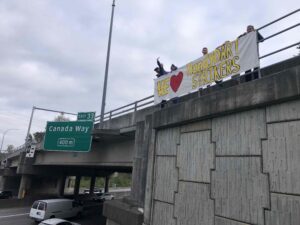
Fortunately, on the picket line there have been many more signs of worker militancy, creativity, and self-organization than there have been of the leftovers reflexes of complacency.
On the picket line I have heard workers discuss the politics of the strike by critiquing TransDev and also the union leadership. A determination to see through this particular battle is apparent in everyone’s conduct, even those who still tend to defer their power to officials. But also, people are thinking about the battles beyond this particular strike, when we get back to work and begin preparing for the next contract negotiation.
On the picket line we are talking about how we organize our households and find child care for our kids. We talk about Gaza and how to divest our pension funds from Israel’s genocide against Palestinians. We paint banners on the ground together, and bring and BBQ food to eat together.
The challenge that we face is how to take these disparate and spontaneous examples of rank and file collectivity, which are particular to the conditions of of life on the picket line, and make them last.
Two proposals
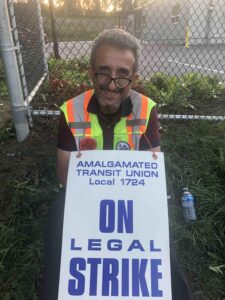
I want to make two proposals about how we can get better organized during this strike. First, that we bring more workers into the creative work of strengthening the picket line by holding short meetings at the beginning and end of each picket shift. That is possible because we all come together to sign in and out from our picket duty. We can take that opportunity to talk briefly together about what weaknesses and strengths we’re noticing on our picket shift, and what we can do to make the line stronger. What would make it feel better for picketers? Are there things individuals are doing (good or bad) that we could make policies to improve together? Is there anything we could do to increase the public visibility of the picket line?
Second, that we create ad hoc committees of strikers beyond any particular depot in order to work together to strengthen the strike. One committee could be tasked with creating signs and banners in order to improve the visibility of the picket line. Another committee could work on striker education – most importantly about our collective bargaining agreement. Without interrupting picketing work, this committee could organize discussions at different picket locations, on different shifts in order to lay the foundations for the active and informed leadership of ATU members during this and future contract negotiations.
This strike is not an isolated or unqiue struggle against TransDev. Regardless of what happens, we will have fights ahead. And by struggling together well today, we also prepare to be better organized and stronger tomorrow.